
Elbow Grease, and why you leave energy unspent
Elbow Grease is the Janitor's cleaning effect, and the trigger is a habit rather than a button: finish a combat round with at least 1 energy still available and you gain it.
That inverts the usual advice about spending everything. On most characters, unspent energy at the end of a turn is wasted. Here it is the input, so the question each round becomes whether the card you could still play is worth more than the cleaning effect you would get by holding the energy instead.
You do not have to hold energy every round to play the character well. Holding it on the rounds where the extra cleaning would change the fight, and spending normally otherwise, keeps the deck doing damage while the effect builds up.
The shine rule: clean a card with nothing on it
Cleaning a card that has no gunk on it gives that card a shine, and a shining card has a x2 modifier: it resolves its effect twice. The cleaning effect that does this works on any card in your hand, not only on the cards the Janitor is expected to use.
That is the whole engine. Hand the shine to a damage-boosting card and you get the boost twice. Hand it to a status card or an energy card and the same doubling applies. Players who have written up full Janitor runs describe a knife that gained damage for every gunk it cleaned and attacked twice on the same play, and an Elbow Grease used on a single card to put it at double value.
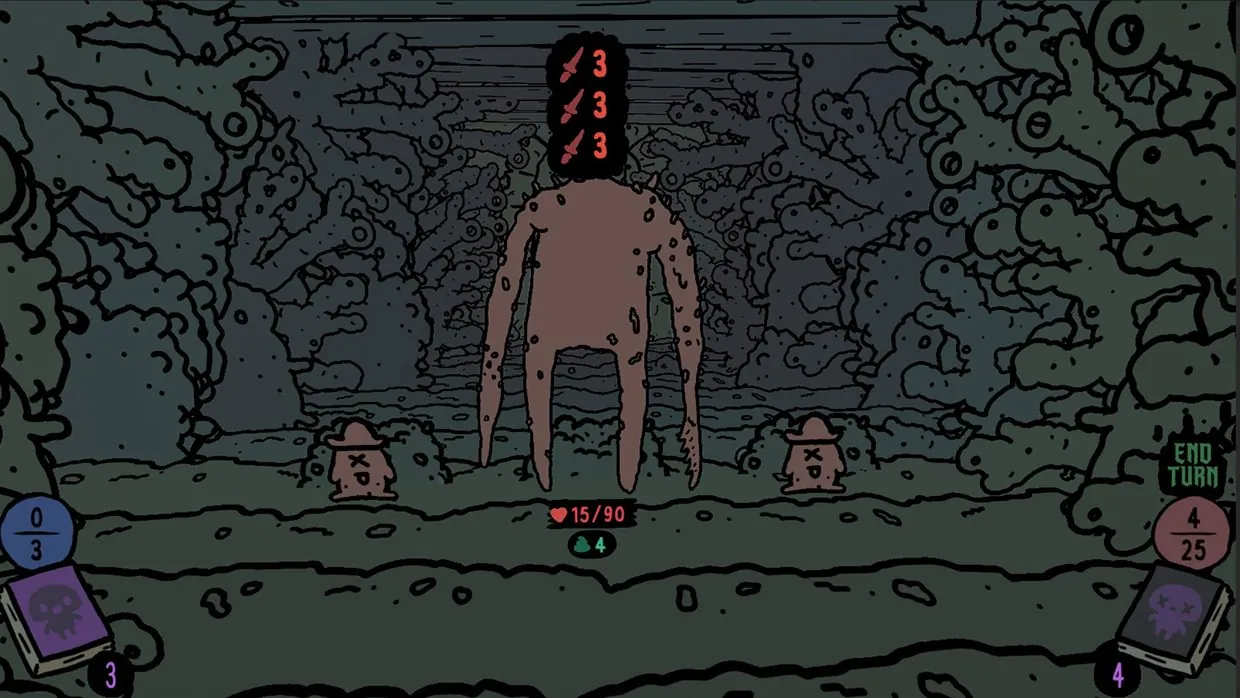
Five separate places this page works from describe the shine rule the same way, including two gameplay recordings where the doubling is visible, so it is one of the more reliable mechanics on this character.
What gunk does to your cards
Gunk is the Facility's answer to a clean hand, and it does two things at once to a card carrying it. The card costs 1 more energy, and it stays in your hand for extra turns, with the number of extra turns matching the number of gunk stacks on it.
Applied across a hand, that is a slow deck rather than a damaged one. Cards you wanted to cycle arrive later and cost more when they do, which is why the Janitor's best turns tend to come from clearing a card completely rather than from playing around the gunk.
Cleaning gunk off also feeds the shine rule. A card you fully clean is a card that no longer has anything on it, which is exactly the state that earns the doubling.
Keeping the deck slim, and controlling your Data
The most repeated Janitor advice is that the deck has to stay small. A player describing their own failed runs put it as having a bloated deck, and the same complaint shows up across threads: too many mechanics from this route flood the deck, and cards you want do not appear when you need them.
Data is the resource that catches people out. Data cards cost nothing and trigger machines, which is a strong combination, but every Data card you take is a card that can appear instead of an attack. One player's write-up recommends holding Data to about 4 by the first mole and roughly 7 by the second, then using the Toad to forget the cards you no longer need. Others put the limit lower, at roughly enough Data to support a single machine.
- Pick one direction early: machines driven by Data, or the decay cards that spread through a fight.
- Trim cards that do not serve that direction, including ones you picked up to farm Data.
- Card draw does more for this character than raw damage, because the deck you want to play is a small one.
- Use the Toad to forget combat cards you have outgrown; advice threads name it as the main way to cut back.
The machine route is the one most player write-ups land on. The pattern they describe is a single strong machine, usually a Clunker, with a Commander to help draw it and an Employee Handbook to make it cheap to replay, and Data cards supplying the triggers. One player reported a Clunker reaching roughly +300 damage at the final boss after two doubling upgrades.
That machine-and-Data shape is community advice rather than an official build recommendation. The developers have not published a Janitor build, and the threads disagree about how much Data is too much.
Where the healing comes from
Healing is the Janitor's weak spot against the other starters, and the specific answer players keep naming is a Foresight card that turns cleaning into health. Killing an enemy with a gunked card produces a card that clears all the gunk off one card and restores 10 health for each gunk removed.
That reward scales with the mess, so a heavily gunked card is worth more than a clean one when you cash it in. The player who described it called it the character's best heal and noted it could be a full heal from a bad board, with the caveat that they had not yet tested it combined with a shine.
This one comes from a single detailed write-up rather than from several independent sources, so treat the exact numbers as that player's observation. The direction matches other reports that healing is harder to come by on this character.
Why reports on Janitor difficulty disagree
Both extremes are documented. One player described four hours without getting past room 4 and called the character unbalanced, while a Steam discussion notes that at the time of posting roughly 8 percent of players had beaten the Gunk Worm at the end. A player who did beat it wrote that they finished with over 400 health and still barely made it.
The players who report the character clicking describe the same two conditions: a very small deck and one clear direction. The ones who report it not clicking describe a flooded deck. Those reports are not really in conflict about the character, they are describing the two different decks.
So there is no honest way to write that the Janitor is weak or that it is strong. Whether the route works for you depends on whether you trim the deck and pick a single line, which is the entire skill the character is testing.
The Janitor is one of four characters the developers named as playable at launch. Early Access rosters move with patches, so check the official Steam news hub before treating any character list as current.